


What coffee Team Building Activity Works Best?
25 November 2024
Mobile coffee business course in Italy: learn how to start a coffee cart, bike or truck
27 May 2026The other face of coffee: why a tech course for coffee can start your future

Discover the hidden engineering behind every espresso and transform your career by choosing a professional tech course coffee to master maintenance.
The specialty coffee industry is booming, but behind every perfect pour-over and every silky flat white lies a complex world of engineering that most consumers never see. As coffee shops invest in increasingly sophisticated equipment, the demand for skilled technicians has reached an all-time high. If you are looking to enter this field, choosing a professional tech course coffee is no longer just an option – it is a strategic necessity.
In this comprehensive guide, we will explore why technical expertise is the backbone of the coffee business, what you will learn in a high-level training program, and how you can transform a passion for mechanics into a profitable international career.
1. The Growing Demand for Specialized Coffee Technicians
For decades, the “coffee machine repairman” was often a generalist plumber or electrician. Today, that has changed. Modern espresso machines are masterpieces of thermodynamics and electronics. They feature PID controllers, touchscreens, variable pressure profiles, and sophisticated telemetry systems.
Attending a dedicated tech course coffee allows you to bridge the gap between traditional mechanics and modern digital technology. Business owners are no longer looking for someone who can just “fix a leak”; they need experts who can optimize a machine to deliver a specific sensory profile. This shift has created a massive opportunity for those who invest in espresso machine maintenance training.
2. Setting the Foundation: Commercial Coffee Machine Installation
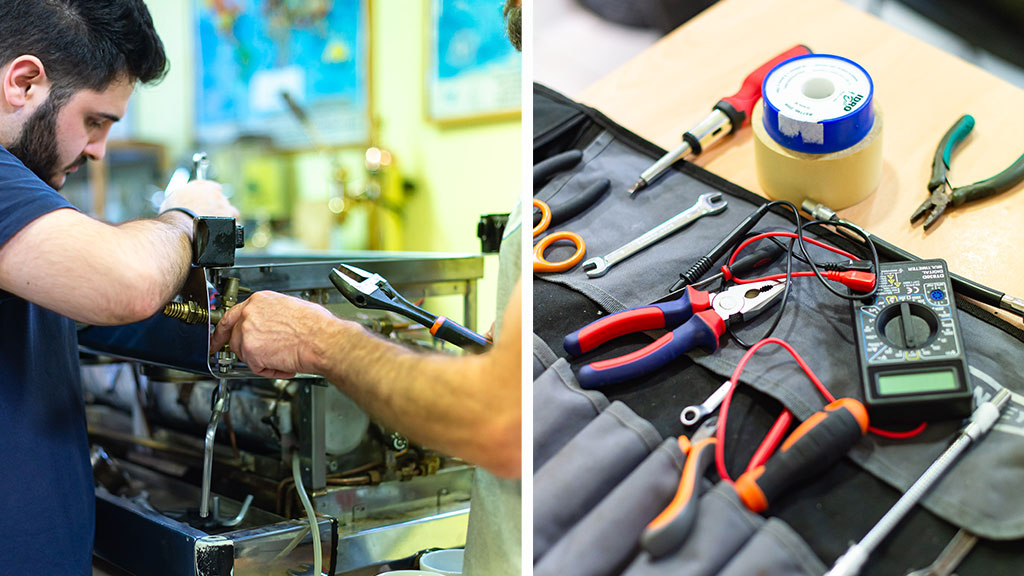
One of the most critical phases of a machine’s life is its first hour on the counter. A large percentage of future mechanical failures can be traced back to poor installation. In a professional tech course coffee, the first pillar of learning is commercial coffee machine installation.
Water: The Silent Killer
You cannot talk about installation without talking about water. Water makes up 98% of an espresso, but it is also the primary cause of equipment failure. A technician must learn to:
- Perform chemical water analysis (GH, KH, pH, and TDS).
- Select the correct filtration system (reverse osmosis vs. resin filters).
- Understand the delicate balance between preventing limescale and avoiding copper corrosion.
Learning how to correctly set the incoming line pressure and calibrate the rotary pump is what separates a hobbyist from a professional technician.
3. Deep Dive into Espresso Machine Technology
To repair a machine, you must first understand the physics of how it heats and moves water. A high-quality tech course coffee covers the evolution of espresso technology in depth.
Heat Exchangers (HX) vs. Multi-Boiler Systems
Understanding the difference between an old-school HX system and a modern multi-boiler machine is fundamental.
- HX Systems: Use a single large boiler for steam, with a tube passing through it to heat the brewing water. It requires a “cooling flush” and a deep understanding of thermal siphons.
- Multi-Boiler Systems: Feature independent boilers for each group head, allowing for millimetric temperature stability. This is the way that is right now followed by the best companies, right on the way to the trend that considers espresso not a mere product, but a real experience.
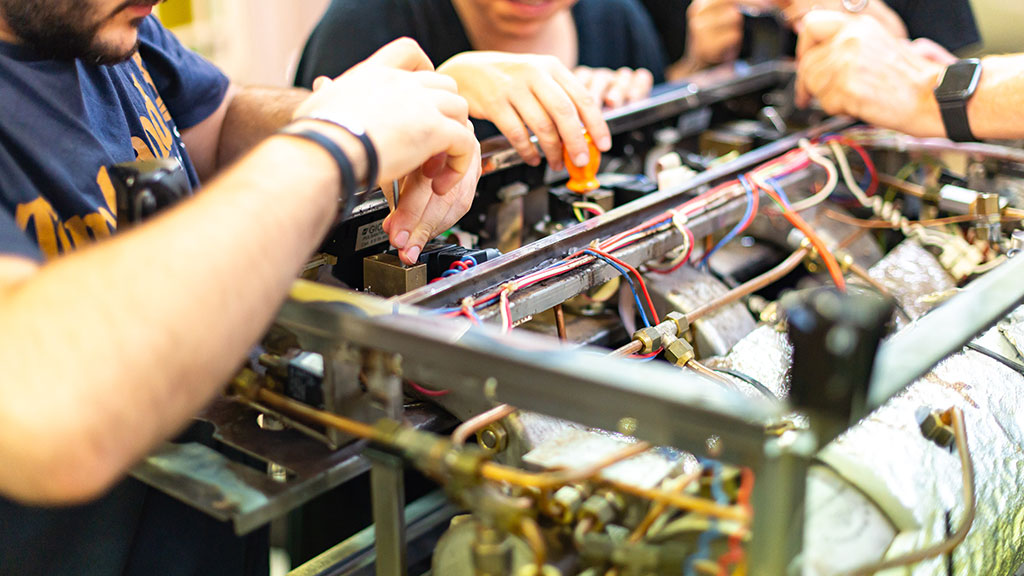
As a student, you will dismantle these systems to understand how solenoids, check valves, and flow meters interact to create the perfect 9 bars of pressure. This technical knowledge is the core of our Espresso Machines Maintenance and Reparation Course.
4. Troubleshooting: Mastering Common Espresso Machine Problems
The most valuable skill a technician possesses is “troubleshooting”—the ability to diagnose a fault quickly and accurately. During a tech course coffee, you will spend hours simulating real-world failures.
What are the most common espresso machine problems?
- Pressure Loss: Is it a failing pump, a clogged gigler, or a faulty expansion valve?
- Temperature Instability: Often caused by scale buildup on the probes or a malfunctioning SSR (Solid State Relay).
- Leaking Group Heads: Usually a simple matter of group gaskets or shower screens, but can sometimes indicate wear on the brass components.
- No Steam Power: Typically related to vacuum breaker valves or pressure switches (Pressostats).
Mastering these common espresso machine problems ensures that you can minimize “downtime” for a coffee shop, which is the most expensive cost for any business owner.
5. Beyond the Machine: Grinder Calibration and Repair
A common mistake is focusing solely on the espresso machine. However, the grinder is arguably more important for cup quality. Any serious tech course coffee must include a module on grinder calibration and repair.
You will learn to:
- Identify the wear patterns on flat vs. conical burrs.
- Replace capacitors in motor starters.
- Calibrate electronic “grind-on-demand” timers.
- Deep-clean internal chambers to prevent rancid oil buildup.
Without a perfectly functioning grinder, even a $20,000 espresso machine is useless. A technician who can service both is twice as valuable to the client.
6. Global Standards: The SCA Coffee Technicians Program
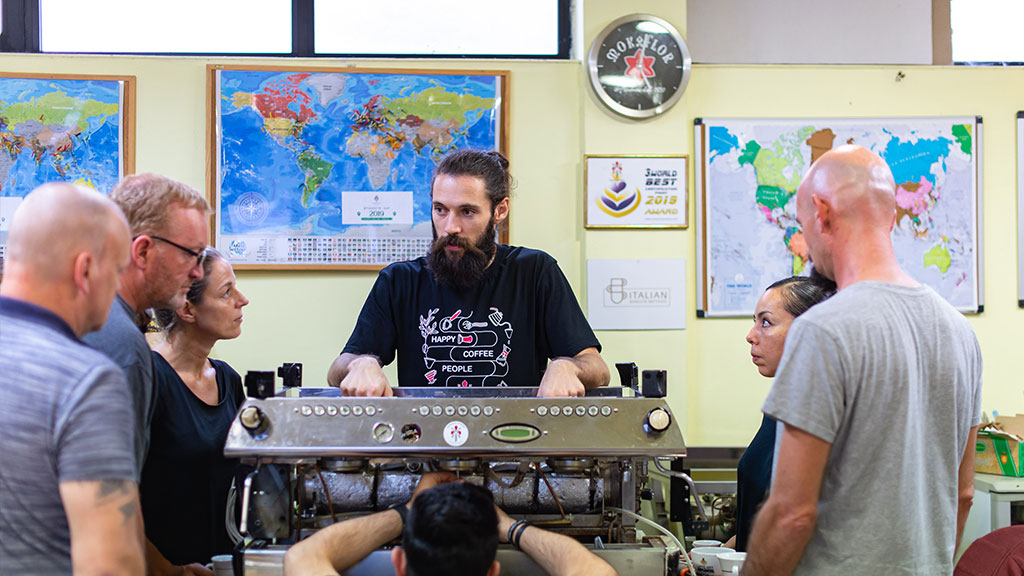
At Espresso Academy, we believe that local expertise should meet global standards. This is why our training is designed to prepare students for the highest levels of international recognition.
The skills acquired in our tech course coffee directly align with the SCA Coffee Technicians Program. This modular certification system created by the Specialty Coffee Association covers hydraulics, electrical systems, and water chemistry.
By combining our hands-on experience with the SCA curriculum, we ensure that our students don’t just “learn to fix things”—they become part of an elite global network of certified professionals. This certification is a powerful tool for your CV, allowing you to work in any specialty coffee hub in the world, from London to Dubai.
7. The Business of Repair: How to Build a Profitable Career
Why is a tech course coffee a great investment? Because it offers multiple revenue streams. As a trained technician, you are not limited to being an employee. You can:
- Offer Preventative Maintenance Contracts: Helping cafes avoid breakdowns before they happen.
- Refurbish Used Equipment: Buying old machines, restoring them to “like-new” condition, and reselling them.
- Working with roasters that provide their customers with espresso machines on loan.
- … And mainly, Working with espresso machines companies, as inner technician
The ROI (Return on Investment) of a technical course is often much faster than other types of education because the tools are relatively affordable and the hourly rate for specialized technical labor is high.
Conclusions
If it is true that the espresso, first than a recipe, is a technology, the coffee industry is becoming more technical every day. Those who understand the “soul” of the machine will always be in demand. Whether you are a barista looking to diversify your skills, a cafe owner wanting to save on repair costs, or an aspiring mechanic looking for a niche, a tech course coffee is your gateway to success.
Don’t wait for a breakdown to start learning. Invest in your future and master the art of coffee engineering.
Are you ready to get your hands dirty and elevate your career? Explore the full program of our Espresso Machines Maintenance and Reparation Course and book your spot for the next session at Espresso Academy.