


Coffee in the Gulf: From Arabic Traditions to Specialty Coffee
22 October 2025
World’s 100 Best Coffee Shops 2026: understanding the future of coffee (and how to train for it)
22 April 2026Italian Coffee Ambassador in Sri Lanka: Espresso Academy, espresso culture, and IBC certifications worldwide
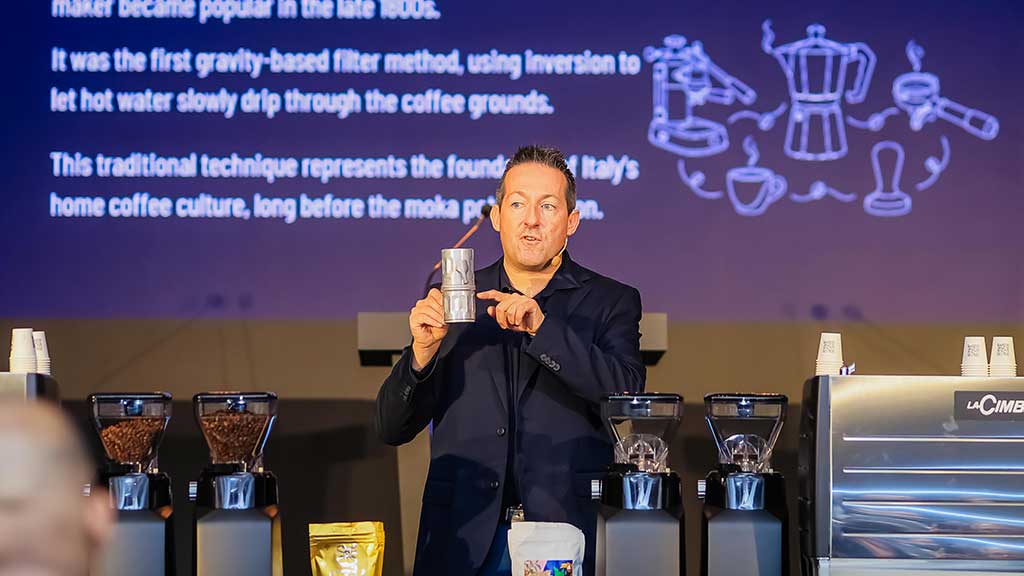
Espresso Academy shares the Made in Italy of espresso through culture, technology, and training
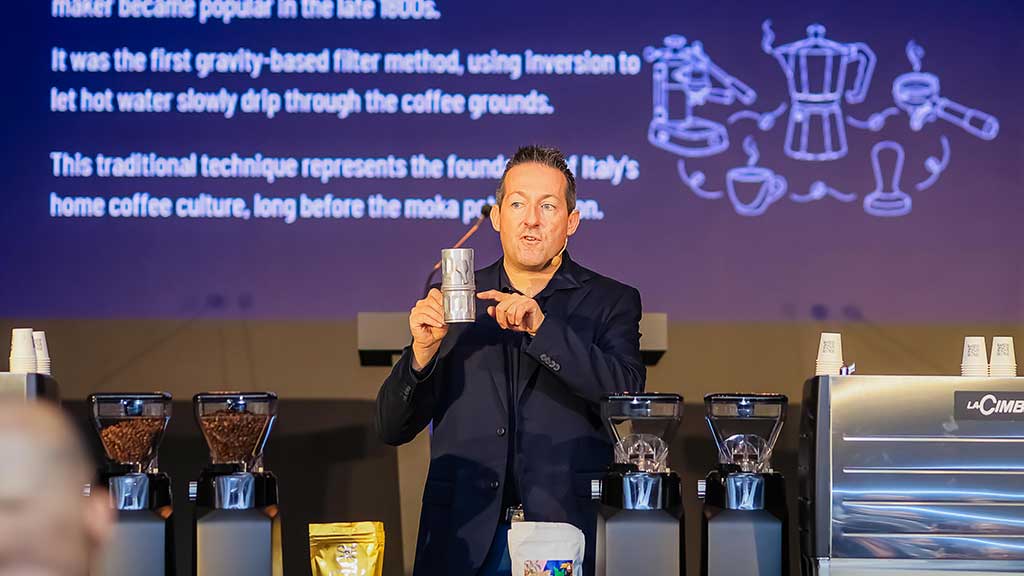
When people speak about Italian espresso around the world, they often think about the result in the cup. Much more rarely do they talk about what truly makes the Italian model unique: the cultural and educational system behind that small cup of coffee.
This is the message that Espresso Academy brought to Sri Lanka through its trainer Simone Celli, invited as Italian Coffee Ambassador within a project promoted by the Ambasciata d’Italia a Colombo.
Sri Lanka: when the island of tea was the island of coffee
Before becoming world-famous for Ceylon tea, Sri Lanka was, in the 19th century, one of the most important coffee-producing countries in the world. The central highlands of the island were entirely cultivated with Coffea arabica, destined for export to Europe.
The spread of Hemileia vastatrix, the coffee leaf rust disease, radically changed the agricultural destiny of the country, leading to a large-scale conversion to tea cultivation. Today, coffee is slowly returning, retaining a strong historical and cultural value.
Presenting Italian espresso culture here meant engaging with an agricultural past that is still very present in the collective memory.
“La Dolce Tazza”: Italian culture meets international hospitality
The first event, “La Dolce Tazza,” was organized together with Colombo Coffee Company and involved managers and professionals from major hotel chains across the country.
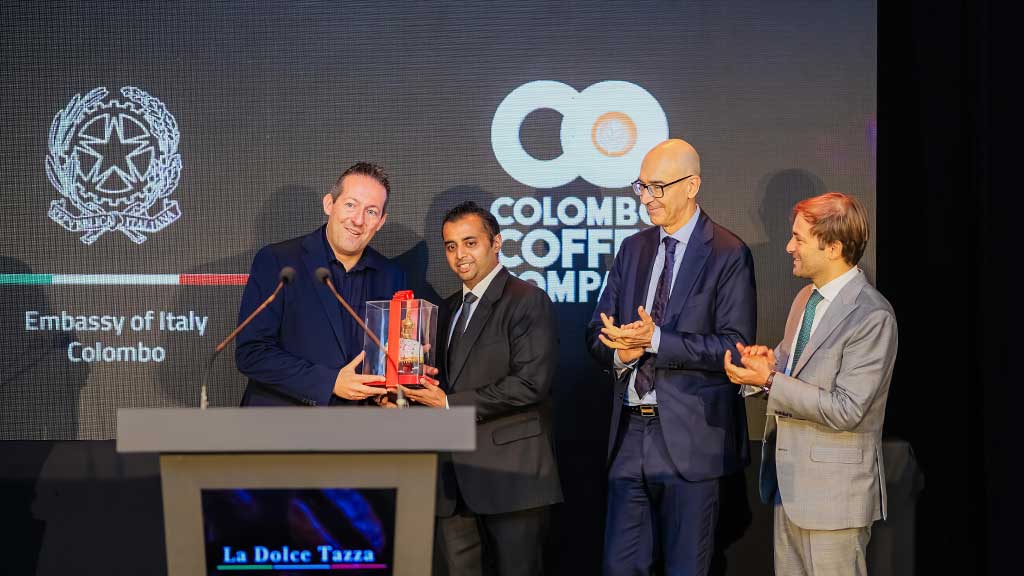
Colombo Coffee Company is the official partner of Espresso Academy in Sri Lanka and has been running IBC – Italian Barista Certificate courses for years. This made the event immediately recognizable not as a simple cultural presentation, but as the continuation of an already established educational pathway.
After the opening speech by Ambassador Damiano Francovigh, the presentation connected coffee history, the Italian espresso revolution, and the explanation of the Italian bar ritual, linking technology, culture, and barista professionalism.
The tasting session was structured as a true lesson on Italian espresso style, allowing participants to connect sensory experience with roasting, blending, and extraction principles.
The Italian bar ritual as a professional model
Special attention was given to the Italian coffee ritual at the bar counter, a defining element of Italian coffee culture.
This is a key concept Espresso Academy transfers in all its courses worldwide: perfect espresso cannot exist without the cultural and professional context in which it is served.
Masterclass with the Ceylon Chamber of Women Entrepreneurs: training, awareness, and practice
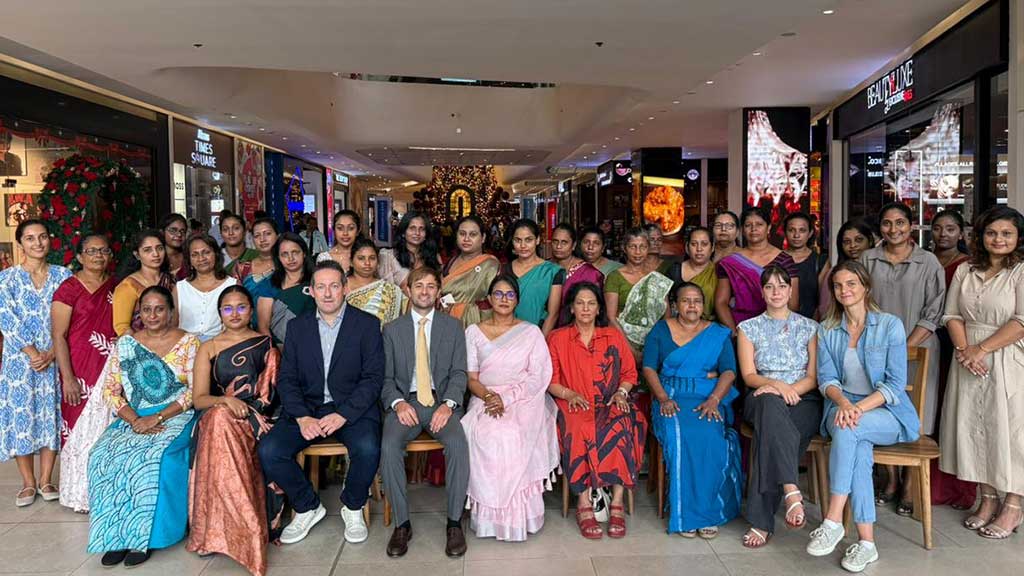
The second event, organized with the Ceylon Chamber of Women Entrepreneurs, had a completely different format and was even closer to Espresso Academy’s educational mission.
This was not a narrative event, but a full training day structured like a course.
The first part focused on the history of coffee in Sri Lanka, connecting the country’s agricultural past with contemporary global coffee culture. This created strong engagement among participants, who recognized an important part of their own historical identity in the story.
The focus then shifted to Italy: technologies, inventions, the birth of the Italian bar, and the development of modern espresso consumption.
The tasting of two espressos became a didactic tool to read aromas, structure, and roasting differences. Each cup was analyzed to understand how dose, grind size, temperature, and brew ratio affect the final result.
The most engaging part was the practical session.
Participants worked directly on the espresso machine, preparing espressos and cappuccinos while applying the parameters explained during the theoretical session. This is exactly the same approach used in Espresso Academy courses and IBC certification pathways: theory, tasting, practice.
This transformed the meeting into a real empowerment experience, where technical knowledge became a concrete tool.
An Italian training ecosystem already active in Sri Lanka
Thanks to the long-standing work of Colombo Coffee Company with Espresso Academy and IBC, many of the technical and educational concepts were already familiar to participants and professionals.
The event therefore strengthened an already existing training ecosystem, demonstrating how the Italian coffee model can be successfully transferred through structured education.
The true Made in Italy of coffee: replicable skills
This experience highlighted a key point: the global success of Italian espresso depends on the ability to teach it.
This is the mission of Espresso Academy and IBC certifications: transforming culture and tradition into replicable professional standards.
Espresso as a universal language
In a country with a deep historical connection to coffee, Italian espresso found fertile ground.
Not only as an iconic beverage, but as a system of knowledge capable of creating connections between different cultures through training, experience, and sharing.