


Green Coffee Defects: Complete Guide with Examples and SCA Table
9 October 2025
How to Dial In Espresso: The Professional Barista Workflow (With Advanced Troubleshooting)
27 January 2026Cappuccino Design: A Technical Guide to Professional Latte Art Evaluation

From perfect texture to symmetry: how international competition parameters define the aesthetics of the perfect cappuccino.
On social media and among coffee enthusiasts, the term “Cappuccino Design” has become the go-to phrase to describe the visual appeal of a decorated cup. However, for a professional barista, aesthetics are not just for show; they are the result of a rigorous technical discipline known as Latte Art. In this article, we will explore what separates an amateur decoration from a masterpiece worthy of a world final, analyzing the technical criteria every professional should master.
1. The Barista’s Canvas: Texture and Contrast
True “Cappuccino Design” doesn’t start with the pitcher’s movement, but with the science of milk steaming. Without a perfect base, even the most complex pattern will fail.
- Micro-texture: The foam must be free of visible bubbles, with a micro-cell structure that reflects light. In technical terms, we look for the “wet paint” effect.
- Color Contrast: The secret to a high-impact design lies in the sharp contrast between the reddish-brown espresso crema and the brilliant white of the micro-foam. If the colors blend into grayish shades (the “muddy” effect), the pattern’s definition will suffer.
2. Judging Criteria at the World Latte Art Championship
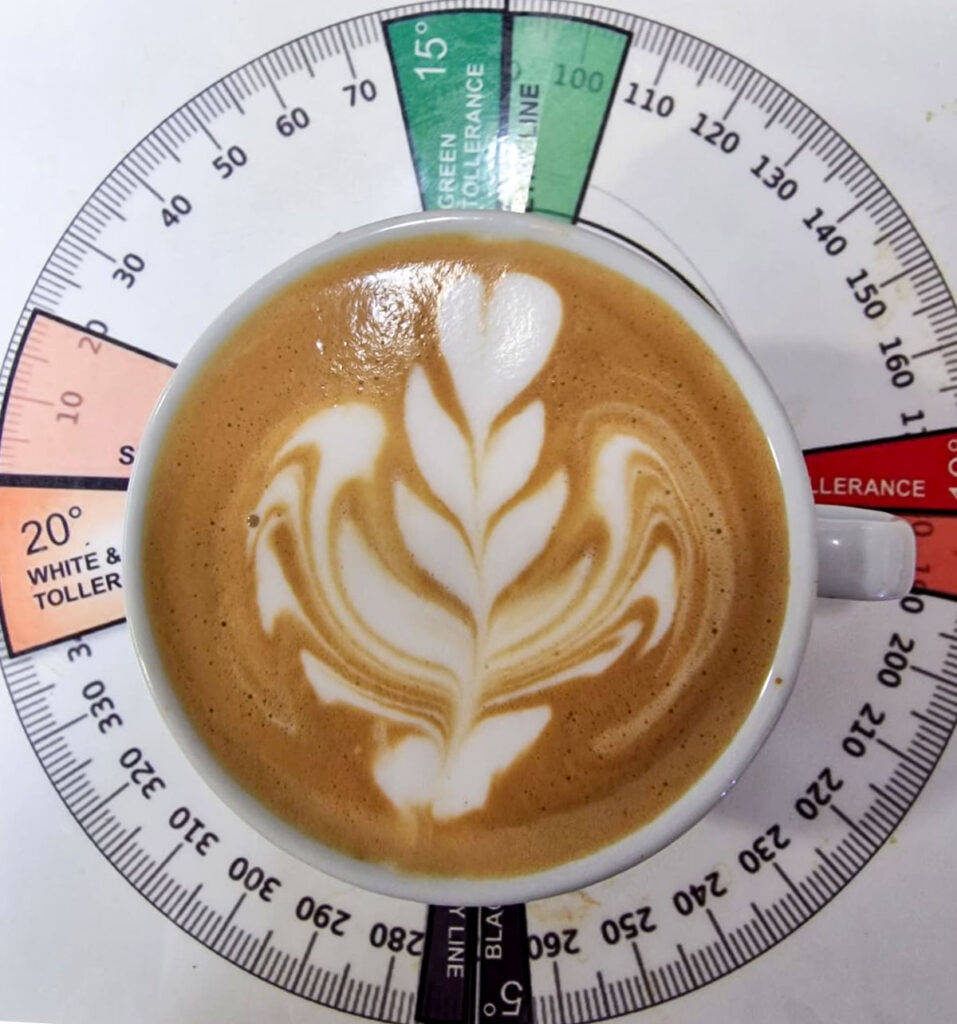
To understand how a cappuccino is judged at the highest level, we must refer to the official regulations of the World Latte Art Championship (WLAC). In these competitions, visual judges analyze objective parameters that go beyond personal taste:
- Symmetry and Positioning: The design must be perfectly centered. If we ideally divide the cup in half starting from the handle, the elements must be mirrored.
- Definition and Clarity: Every line of the pattern (whether it’s a leaf in a Rosetta or the petals of a Tulip) must be distinct, without smudges or blurring.
- Technical Difficulty: Judges evaluate the complexity of the pattern in relation to the available space and the precision of the execution.
3. Elevating the Technique: The Professional Path
While amateur “Cappuccino Design” often relies on etching (using pens or toppings), the true challenge for a barista lies in Free Pouring—creating complex figures solely through direct pouring. This skill requires months of practice and a deep understanding of fluid dynamics.
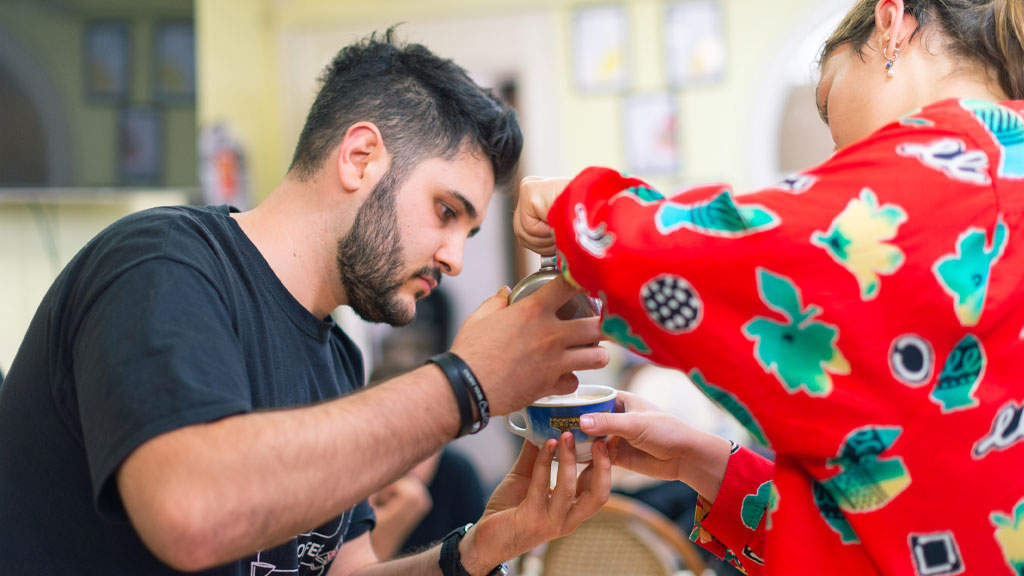
Want to master these techniques? For those looking to turn their passion into a career or refine their style under expert guidance, Espresso Academy offers the Advanced Latte Art Course (Latte Art Grading), a certified program that analyzes every detail of the pour.