


Cappuccino Design: A Technical Guide to Professional Latte Art Evaluation
15 January 2026
How to Steam Milk for Cappuccino: A Complete Microfoam Guide
11 February 2026How to Dial In Espresso: The Professional Barista Workflow (With Advanced Troubleshooting)

Dialing in espresso is one of the most valuable skills in any coffee bar. It is also one of the most misunderstood: many baristas think dialing in means chasing a “perfect time” or copying a ratio from a chart.
In real service, dialing in is a repeatable decision-making process that balances three goals:
- Taste quality (sweetness, balance, clean finish)
- Consistency (repeatable shots across baristas and shifts)
- Speed (fast corrections with minimal waste)
If you can make espresso, this guide will help you stabilize and improve it—with a workflow you can teach to your team.
Want to learn dial-in and troubleshooting with real café scenarios and structured trainer feedback? Our Barista Courses include hands-on practice on professional espresso machines and grinders, focusing on recipe building, puck prep, and consistency during service.
What “dialing in espresso” really means
Dialing in espresso is the act of defining a stable espresso recipe for a specific coffee, grinder, and machine—then adjusting variables in a controlled way until the flavor and performance match your target.
A successful dial-in means:
- Your espresso tastes aligned with the coffee’s potential (sweetness and balance are present)
- The shot behaves consistently (flow and time are repeatable)
- The recipe can be reproduced by the entire team
This is why professional dial-in is not just “technique”—it is quality control.
Numbers are instruments; taste is the Key point
In professional training, numbers exist to make quality repeatable—especially in high-volume service.
- Time is a diagnostic signal, not the goal
- Yield (g out) is a flavor steering wheel
- Grind size is your main flow control
- Puck prep is your consistency engine
If your shots “hit the time” but taste wrong, your process is not dialed in—it is merely timed.
Step 0: Stabilize your fundamentals (a 5-minute pre-dial-in checklist)
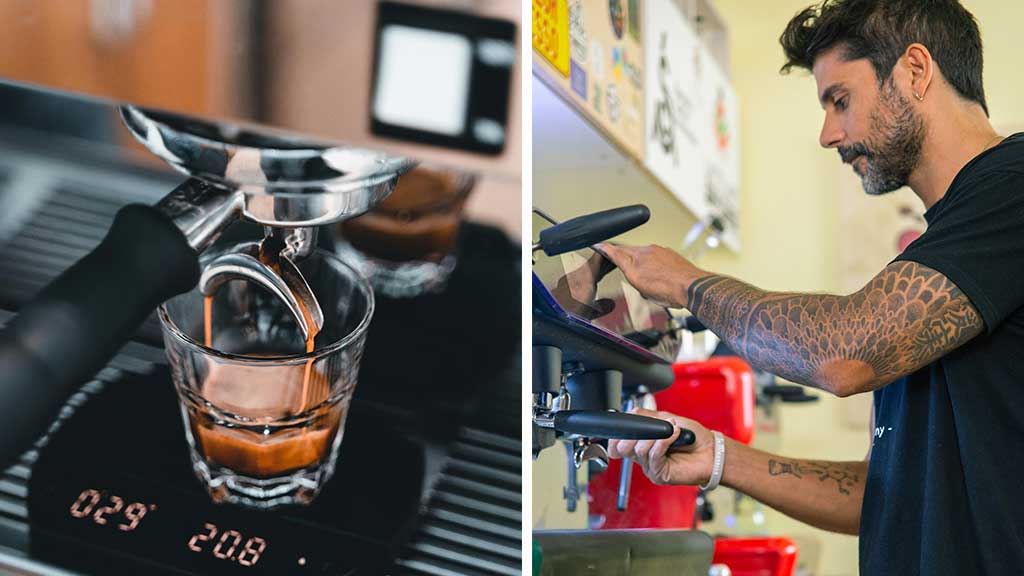
Before touching the grinder, confirm you’re not creating false problems.
Machine stability
- Machine fully warmed up and stable
- Shower screen clean, gasket in good condition
- Consistent flushing routine (avoid overheating or random cooling)
Grinder readiness
- Burrs in good condition; grinder clean
- Retention managed with a consistent purge routine
Basket and dose compatibility
- Use a basket that matches your intended dose
- Avoid extreme under- or overdosing that creates inconsistent headspace
Coffee readiness
- Very fresh coffee (especially lighter roasts) may be unstable due to degassing
- Confirm roast style (traditional espresso vs modern specialty) and intended profile
If you skip this checklist, you can waste coffee “fixing” a problem that is actually a dirty screen, unstable temperature, or inconsistent prep.
Step 1: Set a baseline espresso recipe you can actually repeat
Your recipe should be measurable, teachable, and realistic for the bar.
Define the recipe variables
- Dose (g in): coffee in the basket
- Yield (g out): beverage weight in the cup
- Time (s): total shot time (pump start to stop)
Your first goal is not perfection. Your goal is a stable baseline you can improve.
A professional rule: start “in the middle,” then steer flavor
Avoid beginning with extreme recipes. Start with a balanced baseline and tune from there based on taste and café style.
Call to action — Build recipes the professional way
If your team struggles to standardize dose/yield/time, our Barista Courses teach structured recipe building and repeatable workflows that reduce waste and improve quality control across the bar.
Step 2: Decide what stays fixed (so adjustments make sense)
Dial-in fails when baristas change multiple variables at once. Decide what is fixed during the session:
Fixed variables (keep consistent)
- Basket type
- Dose target (within a tight tolerance)
- Prep method and tamp style
- Cup/scale position and stopping point for yield
- Temperature setpoint (if adjustable) and station routine
Adjustable variables (priority order)
- Grind size
- Yield (or ratio)
- Dose (only if basket/headspace is wrong)
- Temperature/pressure/flow (advanced tuning, only with a clear reason)
In most cafés, the fastest safe approach is:
grind first → yield second → everything else last
Step 3: Puck prep—the real foundation of consistency
Many “dial-in problems” are actually puck prep problems. If your shots vary wildly from one barista to another, your grinder might be fine—your prep is not standardized.
The café puck prep checklist
- Dry basket (water can create weak points and channeling)
- Even distribution (no large voids, no side mounds)
- Level tamp (flat puck matters more than “tamp force”)
- Clean rim (proper seal and repeatable resistance)
What to prioritize in training: levelness and repeatability
Teams often over-focus on tamping pressure. In professional service, the priorities are:
- repeatable distribution
- level tamp
- consistent routine (same tools, same steps, same pace)
Channeling is one of the most expensive espresso defects in a café. In our Barista Courses, you practice distribution and tamping workflows to reduce channeling and keep extraction stable even during rush hours.
Step 4: The dial-in loop (observe → taste → adjust → verify)
This is the loop you want every barista to learn, because it works under pressure.
4.1 Observe the shot (before tasting)
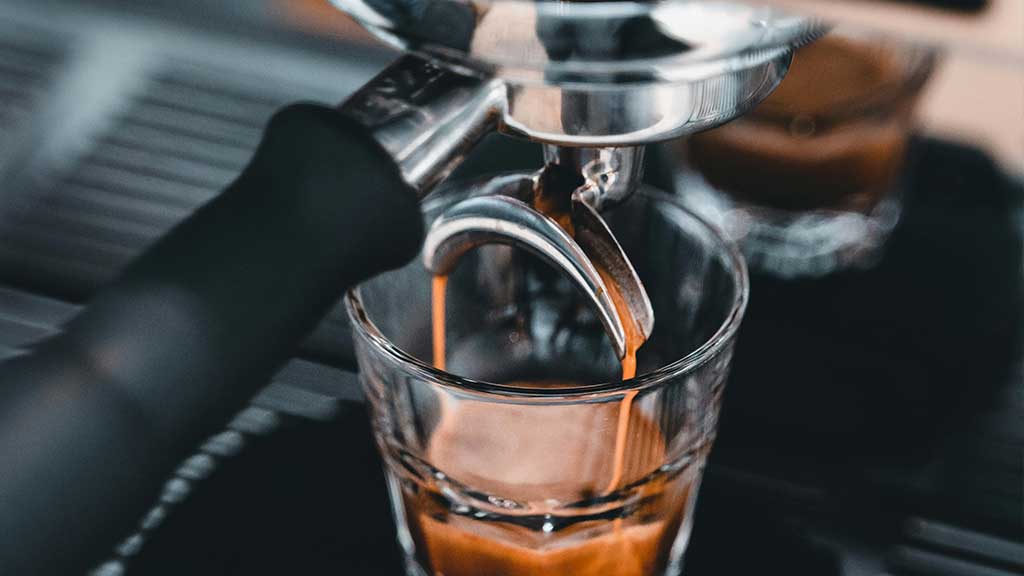
- First drip timing: extremely early suggests low resistance; extremely late suggests over-resistance or choking
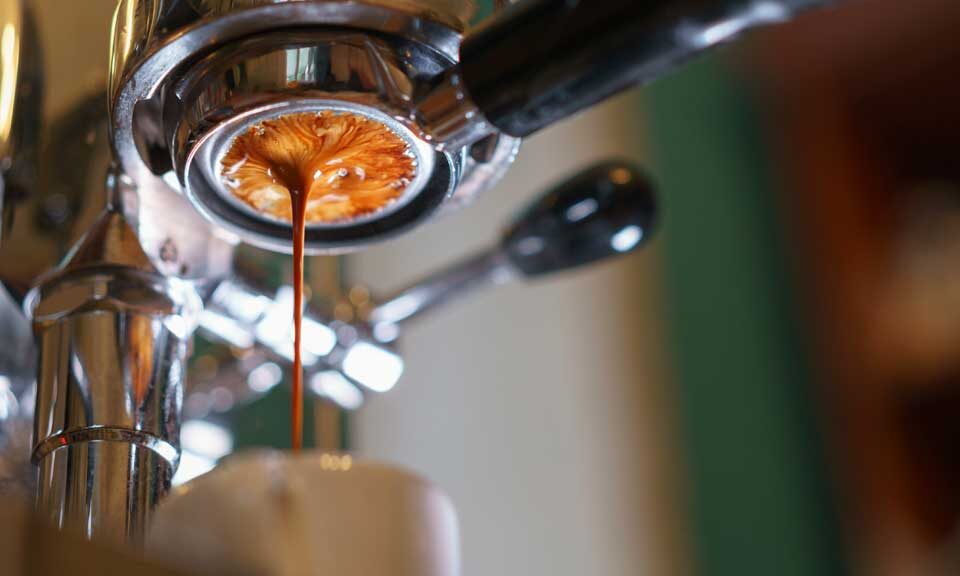
- Flow behavior: steady stream vs spurting (spurting often indicates channeling)
- Early blonding: pale flow too soon often indicates too coarse or channeling
- Total time: confirm it sits in a workable range for your recipe
4.2 Taste with a consistent structure
Taste immediately and evaluate:
- sweetness (present or missing?)
- acidity (pleasant or sharp?)
- bitterness (pleasant cocoa or harsh dryness?)
- body (thin or syrupy?)
- finish (clean or drying/astringent?)
4.3 Make one change only
Choose the single most effective adjustment, then verify with the next shot.
The fastest corrections: grind controls flow, yield shapes flavor
In service, grind is usually the fastest lever:
- Shot runs too fast → grind finer
- Shot runs too slow → grind coarser
But once flow is reasonable, yield becomes your flavor steering wheel:
- Want more body and intensity? Slightly reduce yield
- Want more clarity and a cleaner finish? Slightly increase yield
A professional dial-in uses both tools, in the right order.
Espresso troubleshooting: taste → likely cause → fast fix
Use this section as your “bar station cheat sheet.”
Sour / sharp / thin, short finish
Likely cause: under-extraction or over-dilution
Fast fix (priority order):
- Grind finer
- Slightly reduce yield if the shot is long and thin
- Check puck prep (channeling can mimic sourness)
Bitter / harsh / dry, heavy finish
Likely cause: over-extraction or too much resistance
Fast fix:
- Grind coarser
- Slightly increase yield if the shot is too intense
- Verify temperature stability (overheating can amplify harshness)
Watery / weak body
Likely cause: too high yield, channeling, or incorrect dose
Fast fix:
- Reduce yield slightly
- Improve distribution and tamp consistency
- Confirm dose matches basket
Sour + bitter at the same time (confusing, “messy” flavor)
Likely cause: channeling (simultaneous under- and over-extraction)
Fast fix:
- Reset puck prep routine (distribution + level tamp)
- Consider slightly coarser grind with better prep
- Verify basket dryness and cleanliness
Advanced troubleshooting matrix (for baristas and trainers)
When you need deeper diagnosis, use this matrix.
Astringency (mouth-drying) even when time looks “normal”
Likely causes: channeling, puck cracks, uneven tamp
Fix priority: improve prep first → slightly coarser grind → verify station cleanliness
Inconsistent shot times across baristas
Likely causes: inconsistent workflow steps, grinder retention, dose variation
Fix priority: standardize routine → implement purge rule after grind changes → log recipe and correction
Choking (stalling, dripping only)
Likely causes: grind too fine, overdose, unstable coffee (too fresh)
Fix priority: grind coarser → verify basket/dose compatibility → confirm coffee rest window
Gushing (very fast, pale, hollow)
Likely causes: grind too coarse, underdose, severe channeling
Fix priority: fix prep first if spurting → grind finer → confirm dose and basket match
Troubleshooting is easiest when you train with a structured method and immediate sensory feedback. In our Barista Courses, you practice real dial-in sessions and learn to correct defects quickly with minimal waste.
Dial-in for different roast styles (classic vs modern)
Traditional darker espresso roasts
- Extract easily
- Can become harsh if pushed too far
- Often benefit from controlling bitterness and maintaining stability
Modern specialty roasts (light to medium)
- Can taste sour if under-extracted
- Require excellent prep and careful tuning
- Often benefit from improving uniformity and adjusting yield for balance
The best approach depends on the coffee’s solubility and your shop’s target profile.
Keeping espresso consistent during a busy shift (the café protocol)
Dial-in is not just a morning ritual. Conditions shift throughout the day:
- humidity and temperature changes
- grinder heat
- bean age in the hopper
- different baristas and workflow speed
A simple, professional shift protocol
- Opening check: confirm recipe and taste
- Mid-shift check: pull one control shot, compare flow and flavor
- After rush: verify time, yield, and taste haven’t drifted
- Keep a short log: dose, yield, time, one tasting note, one correction
The minimum effective correction rule
In service, avoid big changes. Make small adjustments:
- one grind step at a time
- verify immediately
- do not chase time if taste indicates channeling or prep issues
Running a café team? Our Barista Courses can help you implement a shared dial-in protocol (opening checks, mid-shift corrections, recipe logging) to improve consistency and reduce waste in high-volume service.
Tools that improve repeatability without slowing you down
- A fast, reliable scale
- Consistent dosing and distribution routine
- Clean/dry basket habit
- A recipe card near the grinder (one per coffee)
- A clear purge rule after grind changes
The goal is not “more tools.” The goal is fewer variables and a stronger routine.
The most common dial-in mistakes (and how to avoid them)
- Chasing a perfect time instead of a repeatable taste target
- Changing multiple variables at once
- Ignoring channeling and grinding finer to “force” time
- Skipping purge rules after grind changes
- Not logging corrections, so the team repeats the same errors daily
FAQ (snippet-ready)
How do I dial in espresso quickly?
Use a fixed baseline recipe, pull a shot, taste and observe, then adjust grind first. Change one variable at a time and verify with the next shot.
What should I adjust first: dose, yield, or grind?
In most café situations: adjust grind first, then yield for flavor shaping. Change dose mainly when basket compatibility/headspace is wrong.
Why is my espresso sour even when the shot is slow?
It could be under-extraction due to poor uniformity or an unsuitable recipe for the coffee. Check channeling and puck prep, then adjust yield and grind with a structured approach.
What causes channeling?
Uneven distribution, clumping, tilted tamp, wet/dirty basket, poor station routine, and worn shower screens can all contribute.
Why do my shots change during the day?
Humidity, grinder temperature, coffee aging in the hopper, and workflow variation can shift flow resistance and taste. A shift protocol helps control drift.
Make dial-in a team skill, not a personal style
The best cafés treat dial-in as a repeatable quality system, not an individual habit. When every barista follows the same observe–taste–adjust–verify loop, espresso becomes more consistent, waste drops, and customer experience improves.
Ready to master dial-in like a professional barista?
Dialing in becomes truly reliable after structured practice with feedback. If you want to build speed, consistency, and confidence behind the espresso machine, explore our Barista Courses. You will train recipe building, puck prep, and troubleshooting in real service conditions—so you can replicate results in any bar environment.