

How to brew coffee at home with a French Press: the complete guide for a perfect filter coffee
4 November 2024
The Ultimate Guide on How to Roast Coffee Beans at Home
17 March 2025What is the Best Pressure for an Espresso Machine?

When it comes to brewing the perfect espresso, pressure plays a crucial role in extraction. But what is the best pressure for an espresso machine? Why is 9 bars considered ideal, and how do some machines advertise 15, 19, or even 20 bars?

In this article, we’ll explore how pressure interacts with temperature, grind size, and flow rate, whether adjusting pressure can improve your espresso, and how lever machines differ from pump-driven models.
For those interested in becoming a coffee machine technician, understanding espresso machine pressure is essential. If you want to master espresso machine repairs, maintenance, and calibration, check out our Coffee Machine Technician Course at Espresso Academy.
What is the Standard Water Pressure for an Espresso Machine?
For decades, 9 bars of pressure has been considered the golden standard for espresso extraction. But why?
The concept of 9 bars became widely accepted with the development of pump-driven espresso machines in the 1960s. However, earlier lever espresso machines, like those introduced by Achille Gaggia in 1947, actually operated at higher peak pressures.
Lever Espresso Machines vs. Pump Machines
- Early lever machines (1940s-50s): These used a spring-loaded lever to generate pressure. Many spring-lever machines reach 10-12 bars at peak extraction before gradually declining.
- Pump-driven machines (1960s-present): The introduction of electric pumps allowed for a constant pressure of 9 bars, which became the industry standard due to its balance between extraction efficiency and flavor clarity.
Today, most commercial and home espresso machines are factory-set to deliver 9 bars at the group head, ensuring optimal extraction. Some machines allow for manual adjustments, but this depends on the internal pump system.
Want to learn how espresso machines work? Our Coffee Technician Course covers calibration, repairs, and machine maintenance.
Is 15 Bar or 20 Bar Better for Espresso?
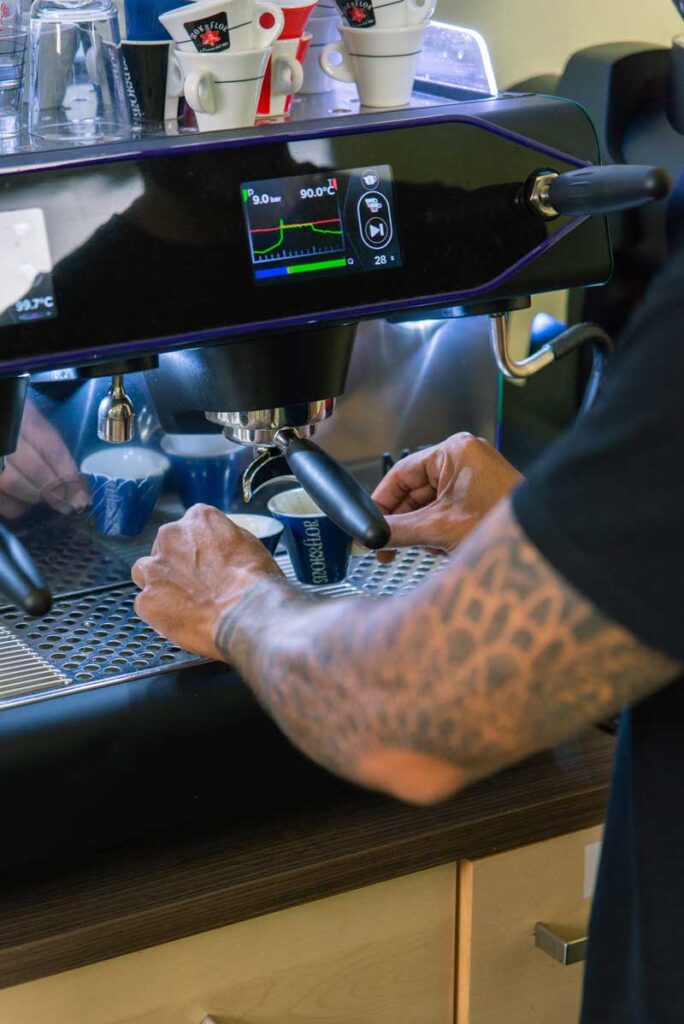
A common question among home baristas is whether a 15-bar or 20-bar machine is better for making espresso. Many home espresso machines advertise 15, 19, or even 20 bars of pressure, leading to some confusion.
Here’s the reality: while the pump might generate 15 bars or more, the internal pressure regulator ensures that only 9 bars reach the coffee puck. Higher pump pressure can help compensate for resistance losses in smaller machines, but it doesn’t mean the coffee is extracted at 15 or 20 bars.
If an espresso were extracted at 15 bars or higher, the result would likely be over-extracted and bitter, as the water would pass through the coffee too quickly, pulling out excessive soluble compounds.
Learn more about how pressure affects extraction (Food Chemistry Research).
Is 19 Bar Good for Espresso?
Many home espresso machines, especially those from mainstream brands, advertise 19 bars of pressure as a selling point. But is 19 bars really better?
In reality, 19 bars at the pump does not mean the coffee is extracted at 19 bars. These machines still regulate pressure down to a level closer to 9 bars at the group head, where extraction actually occurs.
What really matters isn’t the advertised pressure, but how consistently the machine delivers and maintains stable pressure during extraction. This stability, combined with temperature control and proper flow rate, is key to producing high-quality espresso.
For more technical details, check out this deep dive into espresso machine pumps by Barista Hustle.
What is the Ideal Flow Rate for Espresso?
Pressure isn’t the only factor that affects espresso extraction—flow rate is equally important.
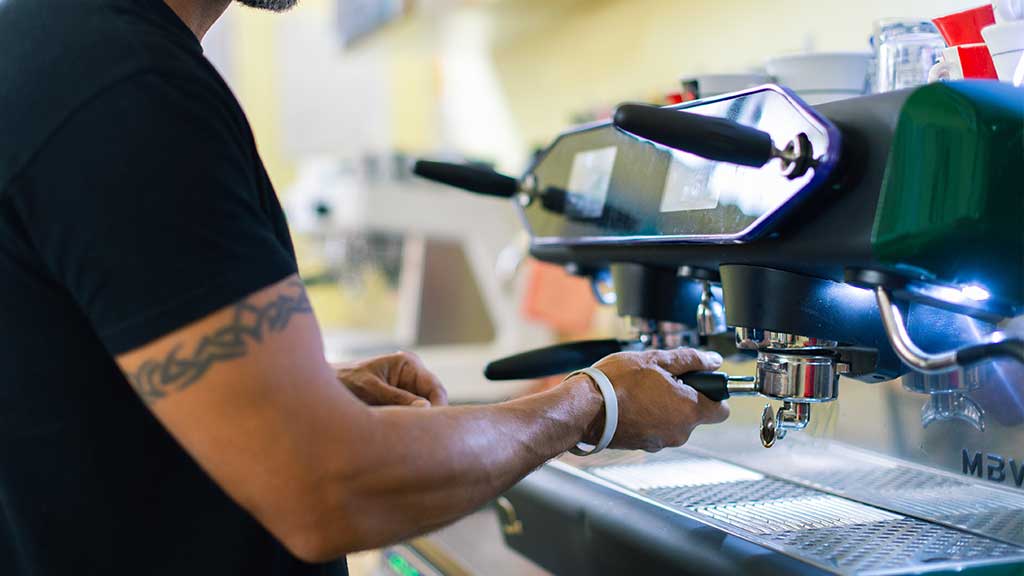
The flow rate, measured in milliliters per second, determines how quickly water passes through the coffee puck. A standard espresso shot typically has a flow rate of 1-2 ml per second, with variations depending on the grind size, coffee dose, and tamping pressure.
Some high-end espresso machines now offer pressure profiling and flow control, allowing baristas to adjust both pressure and flow rate during extraction. This can highlight different flavor notes in the coffee, enhance body, and improve balance in the cup.
How to Adjust the Pressure in an Espresso Machine?
Adjusting the pressure of an espresso machine depends on the machine type:
- Home espresso machines often have an adjustable OPV (Over Pressure Valve), which can be modified to set the extraction pressure closer to 9 bars.
- Commercial machines may require adjustments to the rotary pump or electronic control panel.
- Some high-end machines feature pressure profiling, allowing users to start with lower pressure and gradually increase it during extraction, mimicking the behavior of a traditional lever machine.
If you want to learn how to service and fine-tune espresso machines, check out our Espresso Machine Technician Course, where we cover pressure adjustments, water flow, and pump calibration.
The Role of Lever Espresso Machines in Pressure Profiling
While most modern machines are set to 9 bars, lever machines operate differently.
- Spring-loaded lever machines (e.g., La Pavoni, Londinium, Olympia Cremina) start with a higher pressure (10-12 bars) at the beginning of extraction, which gradually declines as the spring decompresses.
- Direct lever machines (manual, non-spring) require the user to control the pressure manually, allowing for unique pressure profiles.
This gradual decline in pressure is now being replicated in modern machines through flow control and pressure profiling—a feature found in high-end models like La Marzocco, Slayer, and Decent Espresso Machines.
Final Thoughts: Does More Pressure Mean Better Espresso?
In short, more pressure doesn’t mean better espresso. The industry standard of 9 bars has been refined over decades because it produces a balanced extraction, highlighting the best flavors in the coffee.
However, lever machines have always operated at slightly higher peak pressures, which taper off during extraction. This gradual decline in pressure is now being replicated in modern machines through flow control and pressure profiling.
For those serious about optimizing espresso, focusing on grind size, dose, distribution, and water temperature will have a much greater impact than modifying pressure settings.
Interested in learning more about espresso machine technology? Become a certified Coffee Technician with our expert training!